





Hybrid cloud vs Multicloud — What should a business choose?
2020-07-20

Hybrid cloud is an IT environment that combines an organization’s own infrastructure with public and/or private cloud services from providers.
Multicloud is a solution composed of multiple cloud services from several cloud service providers, including public cloud providers (for example, De Novo, Amazon Web Services, Azure, etc.).
Today there are many ways to build infrastructure. Recently, two main approaches stand out: the multicloud approach and the hybrid cloud. How do they differ, and which one should a business choose?
Since the advent of cloud computing, there have been ongoing debates about which cloud deployment model is best suited for organizations. As the era of cloud computing matured, the prevailing idea became that a hybrid cloud is the optimal solution for most organizations. More recently, a new form of hybrid cloud that uses different types of cloud services has emerged — the “multicloud.”
Confusion between hybrid cloud and the newer multicloud deployment model is amplified by the fact that they are often discussed as if they replace one another. The growing buzz around the term multicloud naturally raises the question: is it just another way of saying “hybrid cloud”? The answer is no — multicloud is not a marketing buzzword but a distinct approach to cloud computing. Below are the key similarities and differences between the two concepts to help you understand whether to choose multicloud or hybrid cloud.
What is Hybrid Cloud?
In a hybrid cloud, on-premises systems and third-party public cloud services are connected, with deep integration between these platforms.
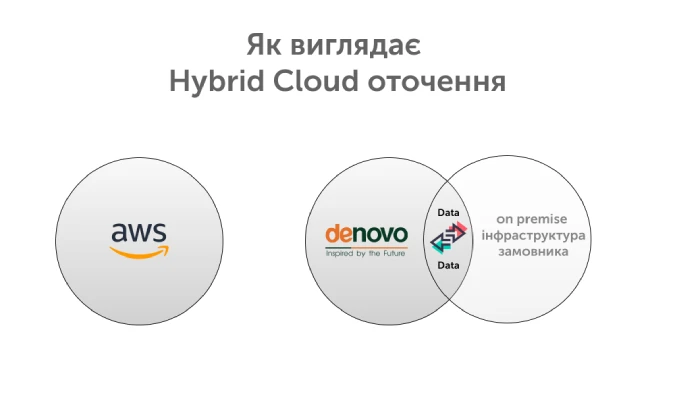
Hybrid cloud environments consist of an integrated network that securely extends the corporate network, creating partitioned but unified network infrastructure. They typically include centralized identity infrastructure that applies across multiple environments. Hybrid clouds provide shared provisioning, management, and allocation of cloud services, as well as unified monitoring and control.
What is Multicloud?
Multicloud is one form of hybrid cloud deployment used to describe operations across several distinct public cloud environments.
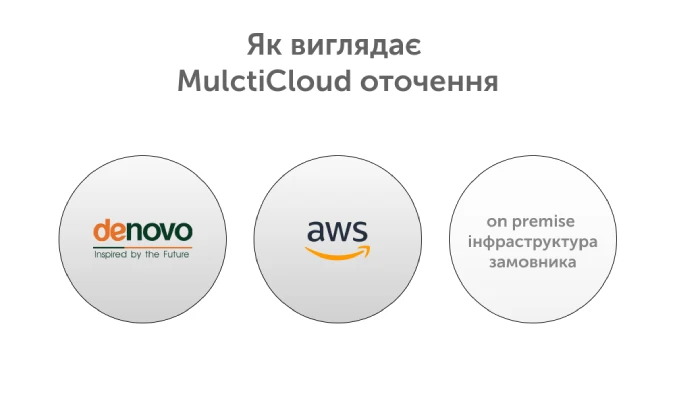
Essentially, multicloud means subscribing to multiple public cloud services, whereas hybrid cloud refers to multiple deployment modes (public cloud, on-premises, etc.) for a single set of services. Deploying across multiple clouds is typically part of a strategy to avoid vendor lock-in. Multicloud typically includes infrastructure with several credential domains applied across multiple environments and the capability to blend delivery mechanisms from SaaS, IaaS, and PaaS models. Multicloud also supports multiple storage services that are independent of the APIs and interfaces used to access these services, along with extensive data handling capabilities that support full lifecycle data management.
Commonalities Between Hybrid and Multicloud
In terms of service attributes delivered to end users, hybrid and multicloud environments are very similar. In fact, any hybrid deployment can be considered multicloud if the customer’s on-premises infrastructure is treated as a cloud, since it includes more than one infrastructure solution. Both hybrid cloud and multicloud leverage a mix of cloud environments based on organizational requirements. They offer flexibility by enabling access to multiple options and can increase overall redundancy.
In both approaches, data may be shared across clouds, and databases can span multiple infrastructure solutions simultaneously. In each model, organizations can adapt deployment strategies according to their budgetary needs. Another similarity is the need for multiple management tools: because both solutions involve multiple independent infrastructure environments, organizations often require diverse sets of tools for tasks such as security, cost control, and operations, and thus invest in a broader range of skills and toolsets.
Key Differences Between Multicloud and Hybrid Cloud
As noted above, every hybrid solution can be called multicloud, but the reverse is not true — not every multicloud infrastructure is a hybrid cloud. Multicloud and hybrid cloud are closely related but are not the same.
- A hybrid cloud always includes on-premises infrastructure and a private or public cloud from a provider. A multicloud always includes multiple public clouds (for example, De Novo, AWS, Google Cloud), but may also include physical and virtual infrastructure.
- In the multicloud model, different clouds are used for different tasks, whereas hybrid cloud components generally work together. As a result, data and processes tend to overlap and mix in a hybrid environment, while in a multicloud setup usage usually remains within each separate cloud.
In a hybrid cloud your organization will need security tools and approaches that can operate simultaneously with different public/private clouds and your own infrastructure. In a multicloud environment, you will need security approaches and tools that can work across multiple public clouds.
With hybrid cloud, your administrators need to focus on internal operational tools. Each cloud provider also has its own set of tools for key operational tasks such as application monitoring, backup systems, performance analysis, and other related services. As such, hybrid clouds typically do not require the use of third-party operational management tools.
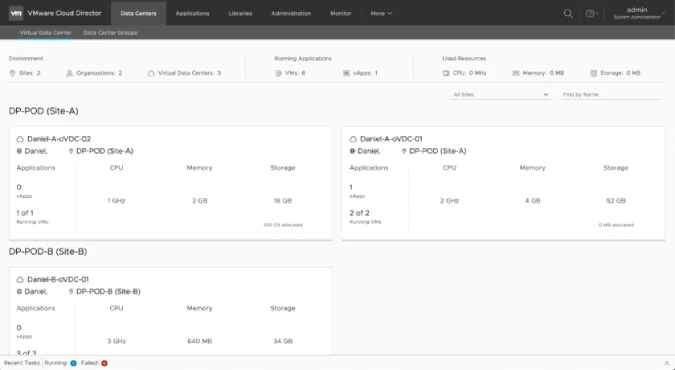
In contrast, in multicloud environments, your administrators need familiarity with tools that can operate across all public clouds and often convert operational functions into base capabilities of public clouds. This requires more attention to having a single tool that can work across multiple clouds.
Overall, in multicloud environments your administrators will spend more time managing service levels, monitoring cross-site connections, and navigating different available toolsets.
With hybrid cloud, you can retain critical data in your controlled infrastructure, while with multicloud that data resides in public clouds. For any organization involved in financial operations, handling confidential data, or required to comply with strict security policies, having a single provider may be considered an advantage for minimizing compliance risks.
De Novo was one of the first to develop the “True Private Cloud” product, which is suitable for companies with regulatory or corporate security policy restrictions.
Multicloud or Hybrid — What Should a Business Choose?
A clearly defined cloud strategy is a critical element for every successful IT department. When planning the launch of applications or systems into cloud environments, as well as transitioning to new solutions, it is necessary to consider the various pros and cons associated with both traditional approaches and newer practices.
Hybrid cloud and multicloud solutions can share similar attributes, but at the operational level there are several differences. Hybrid clouds require more focus on internal operational tools, whereas multicloud environments require greater emphasis and investment in third-party tooling.
In multicloud environments both the cloud provider and your organization share responsibility for data security, while in a hybrid cloud you retain more responsibility and control over data and its security. Each cloud model also has its own unique advantages, disadvantages, and associated costs.
Evaluating the performance of existing workloads compared to the services offered by each public cloud can help provide insight into total cost of ownership (TCO) and return on investment (ROI), thereby supporting the right choice for your organization.