




Less routine, fewer mistakes:
How AI reviews construction projects
An AI tool is being tested in Ukraine to verify that project documentation complies with building codes, legislation, and source data. The system is designed to reduce analysis time from days to hours, minimize errors, and lighten the workload for inspectors, while leaving the final decision to a human.

Limited human resources: the volume of documentation is growing, requirements are not getting any simpler, and the cost of a mistake remains high. Against this backdrop, the State Inspectorate of Architecture and Urban Planning of Ukraine (DIAM) has launched a pilot tool based on artificial intelligence that can analyze project materials and identify discrepancies, relieving inspectors of a significant portion of their routine work. However, the final decision on approval still rests with a human. Detailed information on the development is available on the LIGA.net portal; here, we will focus on the key aspects of its implementation.
Where the Process Starts to Stall
For an inspector, a construction inspection always involves working with a large array of interrelated decisions that must align with one another, correspond to the source data, and not contradict regulatory requirements. A single project can involve hundreds of pages of documentation, drawings, explanatory notes, certificates, and more. All of this must be read and verified to avoid missing an error that may seem minor on paper but can halt the entire process in practice.
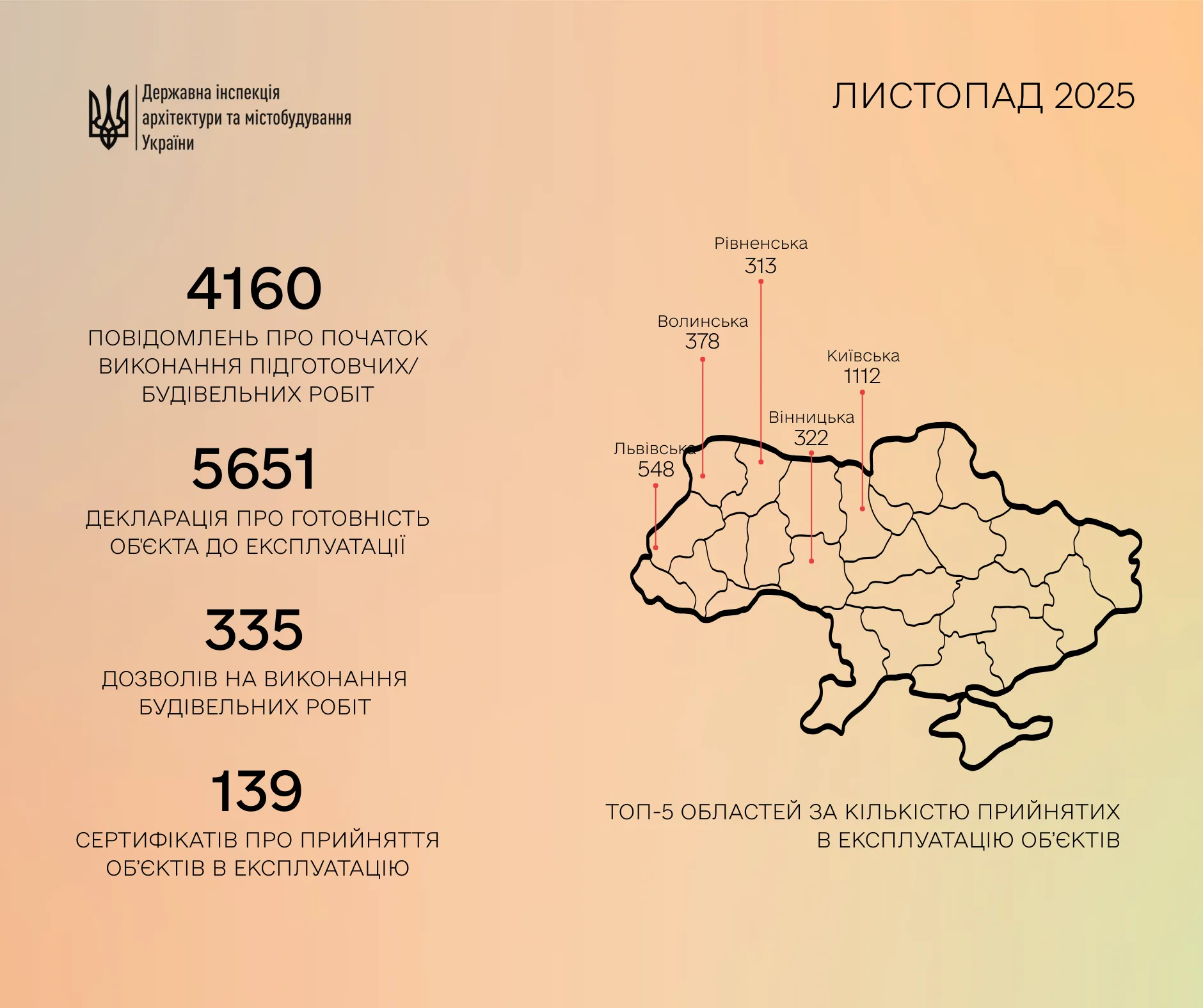
The main problem becomes apparent on a larger scale. Thousands of construction documents pass through DIAM every month. By the time a package reaches the inspection department, it has already undergone an expert review, but this does not mean the workload disappears. Inspectors have ten working days to review the documentation and make a decision on whether construction can begin. For a large project, this means a full-scale analytical effort involving a massive amount of data—sometimes thousands of pages.
Source: LIGA.net
Under these conditions, the inspector is almost constantly working at the limit of their capacity in a high-pressure environment. If even formal deficiencies are found in the project—technical inconsistencies, discrepancies between different parts, or simply the absence of a single, yet mandatory “piece of paper” in the documentation package—this triggers additional rounds of approval and significantly slows down the project as a whole.
The quality of decisions in construction directly depends on the quality of the review. At the same time, the procedure itself relies almost entirely on a person’s ability to manually process an ever-increasing volume of information. The market is moving faster, projects are becoming more complex, there are more sections in the documentation, and the number of specialists capable of thoroughly reviewing all of this does not automatically grow in tandem with the workload. This is precisely why there was a need to develop an AI system that could take over a significant portion of routine, yet difficult and monotonous work. AI is ideally suited for this.
Errors with the most serious consequences
To address these issues, DIAM is working with partners to create the “Digital Inspector,” the first pilot version of which is expected in early summer this year. The developer is Itera Ukraine (a representative office of a major Scandinavian IT company), while De Novo provides the cloud infrastructure and professional technology consulting.
The solution helps identify potential issues even before submitting the application package for a permit. Most often, three types of deficiencies lead to rejections or returns of applications:
- Incomplete application package. This occurs when a drawing, certificate, or other required file is missing, or when documents are simply uploaded with errors.
- Inconsistencies between different sections. Dozens of specialists often work on a single project, so discrepancies in parameters, figures, or descriptions of the same solution may appear in the documentation.
- Non-compliance with source data. Specifically, urban planning conditions and restrictions that the project must strictly adhere to.
The system will primarily address these three groups of errors. Its goal is to provide specialists with an early-stage verification tool so that critical inconsistencies are identified as early as possible, increasing the chances of the project passing approval on the first attempt and saving time for everyone.
Source: LIGA.net
However, the logic behind the development goes beyond simply assisting inspectors. It involves a mass digital service for the entire construction ecosystem: clients, design firms, and expert bodies. It should be noted that this is not DIAM’s first experience with automation. Previously, the agency had already created a digital assistant for the contact center, which helps employees quickly find action algorithms in complex cases and keeps inspectors from being distracted from document reviews. For the inspection agency itself, this became an important example of how digital tools can relieve some of the routine workload without compromising the quality of work.
From ten days to two hours
An intelligent system must read, recognize, correlate, and analyze project documentation as a cohesive dataset. Therefore, the initial prototype is built using a combination of several large language models, including LLAMA and ChatGPT, although the set of models may change during development. The logic here is quite practical: one model works better with document recognition, another with content analysis, and a third with drawing conclusions within a given context. The system also integrates with the Unified State Electronic System for Construction and “Dія.” These digital platforms are intended to serve as the data sources for its operation.
In the first stage, the system must read a document—including a scanned one—extract text from it, structure the data, and then proceed to content verification. Next, an algorithm—which remains invisible to the user—is activated, within which the model receives the specific context required for this particular type of verification. These may include building codes, source data, urban planning conditions and restrictions, as well as other parameters against which the project must be checked. Afterward, the system determines whether there are any omissions, contradictions, or inconsistencies in the documentation.
The key technology here is RAG (Retrieval-Augmented Generation), i.e., generation with augmented context. Its practical value lies in the fact that there is no need to “study” the entire body of building codes in advance, which would be time-consuming, expensive, and not very flexible. Instead, during analysis, the model receives the necessary rules, restrictions, and examples that it relies on for a specific case. DIAM, in turn, provides developers with sets of positive and negative examples—properly formatted documentation, as well as packages containing errors or inconsistencies.
Based on this, the team configures prompts, checks the quality of the system’s responses, and gradually trains it to work more accurately. However, the system does not have the authority to make the final decision. In the first phase, it is planned to use it in parallel verification mode: the algorithm will analyze documents simultaneously with an inspector, after which the results will be compared. If the system consistently produces high-quality results, its level of autonomy can be increased.
The project’s initial focus is on residential construction and public buildings. These types of projects typically involve the largest volume of documentation and require the most time for analysis. After the testing phase, the system is planned to be scaled up to other types of construction. Specific performance metrics have also been outlined—the processing time for a single application with a complete set of documents is expected to be reduced from ten business days to approximately two hours.
Infrastructure as a Trust Factor
The Ukrainian cloud platform De Novo, equipped with AI accelerators, was selected for the development and testing of the solution. In projects of this type, infrastructure directly influences the level of trust in the entire system, as it involves confidential government data. De Novo provided the development team with cloud computing resources featuring powerful NVIDIA GPUs for a six-month product development period. This is an environment where large language models are run, large document batches are processed, and the interaction of multiple algorithms is tested simultaneously.
The operator’s expertise is also involved in the project—Dmytro Fedorenko, Director of AI/ML Business Development at De Novo, serves as a mentor to the development team. His role involves building the solution’s architecture, selecting models, and configuring their collaboration within a single process.
Infrastructure localization is also critical. The data the system works with remains within Ukraine and is processed in a secure data center. This allows for control over access to information across the entire platform and helps avoid risks associated with transferring data to external environments. An additional factor is that the environment in which the solution operates meets the requirements of international and national security standards. De Novo is certified to ISO/IEC 27001, 27017, 27018, 27701, PCI DSS, and the State Information Security Service (KSZI), which means formalized data protection processes, access control, and auditing of all critical operations.
The accelerator is built on the Hopper architecture using high-capacity, high-bandwidth HBM3e memory. This provides a significant increase in GPU cluster utilization and performance for AI model training and inference tasks. The NVIDIA H200 costs approximately $35,000 per unit.
All information is planned to be transmitted and stored in encrypted form. While the model is running, data is temporarily decrypted only in the server’s RAM, without being written to disk, after which the result is again stored in a secure form. Access to documents and conclusions is restricted by user roles through integration with “Dія” and the Unified State Electronic System for Social Services (EDESSB); for this purpose, personalized dashboards and a separate admin panel will be added to the system.
What This Means for Inspections and the Market
The main benefit of implementing the system lies not so much in the automation itself as in freeing up inspectors’ time. Instead of spending hours searching for discrepancies in hundreds of pages of documentation, specialists will receive a structured analytical report and will be able to focus on more complex technical issues. At the same time, AI does not replace the inspector and does not assume responsibility for the final decision.
For DIAM, this is also not about cutting staff. The agency openly acknowledges a chronic staff shortage, so they plan to redirect the freed-up resources to areas of work where automation is not yet possible or where human expertise is specifically required. In this way, the system is intended to improve the efficiency of the entire inspection process without changing the basic logic of control.
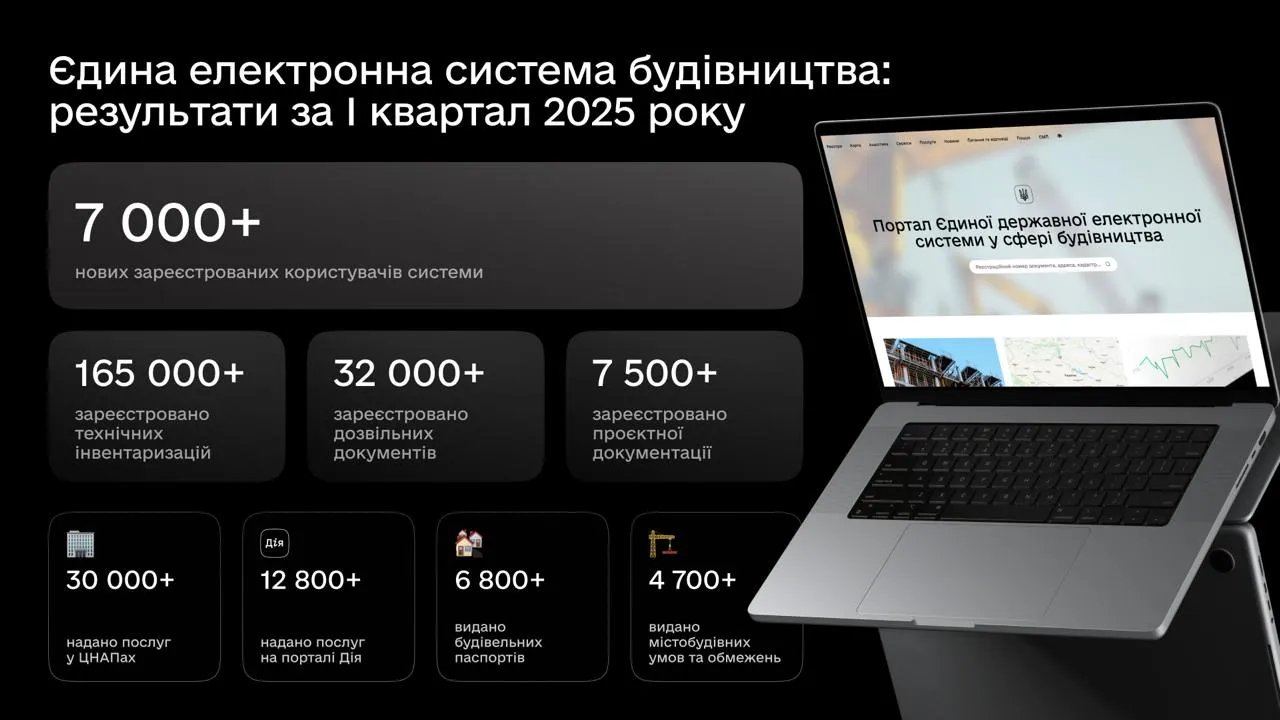
In a broader sense, the “Digital Inspector” is part of the systematic digitization of construction services. For CC1-class construction projects (projects with minor consequences: private homes, outbuildings), some applications are already processed automatically through “Diyu,” and 20% to 30% of such applications are processed entirely without human inspection. The next step is to create an environment where the developer submits an application digitally, the system automatically retrieves the necessary data from government registries, verifies it, and generates a result, while a human intervenes only at the point where a professional decision is truly needed.
Cases

We’ll explain the performance gains that switching from the NVIDIA H100 to the H200 can deliver, and under what conditions a Ukrainian cloud provider has an advantage over hyperscalers

“17,000 unregistered properties” — By the end of this year, Ukraine plans to update the Unified Tourism Registry

AI for Reviewing Construction Projects: How a “Digital Inspector” Analyzes Documents, Identifies Errors, and Automates Processes in Ukraine's Public Sector

The e-Permit service has received an AI module that automatically checks documents, relieving officials of routine tasks

This unique model could change cardiac diagnostics worldwide. Powered by biosensors and NVIDIA H100 capabilities, the system performs diagnostics in minutes instead of hours

This is a story about how artificial intelligence helps the ministry review applications for youth exchanges: it analyzes estimates, filters out vague goals, identifies unjustified expenses, and suggests areas that need clarification

We went to an AI conference for you, and now we're telling you a story about how buying a cheap camera almost ruined a project to implement computer vision at a company. And that's not the only thing that went wrong

Fields are too large, there are too few agronomists, and the weather is too unpredictable. Could AI be the answer? Kernel is implementing 12 ML models — from growth phase forecasting to agrologistics — and showing how to transform agribusiness through data

The Ministry of Youth and Sports of Ukraine has launched the country's first service based on large language models (LLM) on the Dія.Engine platform. The most powerful equipment in Ukraine was used to host the LLM

Every company goes through its own “digital transformation” journey, and each case is unique. This is especially true when it comes to national-scale organizations

The success of an agricultural company today largely depends on information technology. Increasing yields, optimizing logistics, achieving deep automation of routine operations, and ensuring full mobility of employees—all this is possible thanks to the effective use of IT

We discussed how “digital transformation” works in specific examples in the country with Yevhen Yentis, a person without whose participation it is difficult to imagine the success of such national-scale projects as Prozorro and “New Customs”

Interview with Andriy Begunov, Director of the Information Technology Department at PUMB Bank, which ranks among Ukraine's top seven banks in terms of assets (according to data from the National Bank of Ukraine)

The Ministry of Justice of Ukraine is creating an AI assistant that will answer legal questions 24/7. The project will run on LLM in the secure De Novo cloud